
Editor’s Letter
I can’t believe I’m writing this as lockdown constraints are beginning to lift.
It feels – to me at least – as if we’ve been under the current lockdown for such a long time.
Thankfully, lockdown has allowed time to do those chores I’ve been putting off for ages.
Last year I was able to do some big projects in the garden that I’d not had time for previously and the last few months have been the same.
For example too, I’m not sure I would have found time to set up a business if it hadn’t been for lockdown.
I have been incredibly fortunate too, in making some strong contacts through Twitter, through my writing classes and too through the SYP mentorship scheme which have kept me busy with a stream of wonderful editing projects.
Since August, I’ve worked on a mid-grade fantasy, a local history non-fiction book, a YA fantasy, a memoir, a teen YA fantasy and I’m currently working on a novella for a new client.
The work has been varied and all of my clients have been passionate and hard-working individuals determined to produce a project of the highest calibre.
I genuinely feel that my role is very privileged and I feel happier than I’ve been in any other role. At the grand age I am, I feel I’ve found my feet.
Happy writing,
Lesley
Contents:
Author’s Showcase: Anne Faris
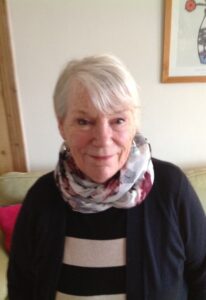 Anne Faris is the author of Baghdad Beloved; her fascinating, funny and heart-breaking memoir of the years she spent in Baghdad with her two young children and her husband, Salah.
I was many years back in England before I ever recounted my story to anyone other than family and close friends.
It was only after a lot of prompting from my two children that I decided to write my Memoir.
I think they needed to know about their abrupt departure from the place they called home.
And they also wanted to know more about Baghdad, the lovely city where they had lived very happily for almost seven years.
When I left England for Baghdad, I was young and fearless.
I was also in love and wanted to live where my husband lived. There was no question of Baghdad being a dangerous place to go: no more than Egypt, say, or Tunisia where many British people went on holiday.
It was easy to get visas for the three of us and there was just an all-round sense of excitement.
I don’t believe I ever thought I wouldn’t return to England at some point.
This was true of the other wives of Iraqi students I met in Baghdad; they all believed at some point they would return.
Exotic
I couldn’t believe how exotic Baghdad was in late 60s and early 70s.
In many ways it seemed to me more advanced than England.
For example, nearly everyone I met was educated to degree level.
The women wore lovely western style clothes they had made themselves. They spoke English, listened to music, read and wrote poetry and read English novels.
They were generally knowledgeable about their country’s politics but also world happenings too.
Family life was very important.
Most social activities took place within the extended family.
Salah’s family was a minority sect in Iraq. They were Baptists, but to my knowledge there was never any discrimination.
Most of the men held professional positions and were engineers, doctors, teachers, lawyers or dentists.
The women I met, particularly the younger ones, were at school or university and this was considered normal.
There was a huge Muslim Shia population who were governed by a very much smaller Sunni minority; but this had always been the case and there was no evidence of any discrimination here either.
Sunni men married Shia women and vice versa.
It wasn’t until much later, under Saddam, that this began to change and divisions started to appear between those who joined the Ba’athist party and those who did not.
Top jobs were then distributed accordingly.
Return To England
When I returned to England in 1976, I was a single mother.
The atmosphere I returned to was not sympathetic.
Politically we seemed to be regarded as feckless and there was very little support.
The children found it very hard. They had been happy in Baghdad, with a mother and father, a lovely house and very devoted extended family.
Back home there were just the three of us.
English was almost their second language since they spoke fluent Arabic from going to school in Baghdad.
I tried but was possibly not as attentive as I had been.
I had to find a home, work and a school for them.
They found making friends difficult at first I think. Nadia even begged me to change her name to Sharon, so she could fit in at school more easily.
The food was different too. That they bedded down and just got on with it is a huge tribute their personal resilience from such a young age.
Writing
Writing my first draft of Baghdad Beloved took about a year.
It was easy to begin with. It was just my story.
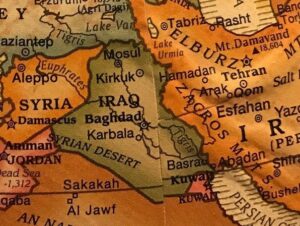
However, after the invasion of Iraqi in 2003, I became very saddened by pictures of Baghdad and Iraq looking like a devastated third world country.
I had never seen it like that. So, I had to do quite a bit of research to explain how Iraq had moved from a secular happy place to a city of mistrust, fear and ultimately death and destruction.
I completed my original manuscript quite a while ago but after a few half-hearted submissions (rejected) I left it.
The rejections never bothered me that much, (remembering always the experience of J K Rowling!) but I think I was daunted by the submission process: writing a synopsis and covering letter, finding an agent and entering a world that was utterly foreign to me.
I know many people do that, but I found it difficult. Maybe I just didn’t have enough self-belief.
 I was also unsure whether my story would be interesting to others; my family and friends loved it, but I needed more.
Faber and Faber
So, I signed up to a Masterclass course at Faber and Faber.
It was here I had to read my own words out loud to an audience for the first time.
Thankfully, it was well received.
I was advised on the title and the absolute necessity of strong editing.
I made many attempts at editing. It is quite difficult.
Eventually, I realised I would benefit from professional help and asked Lesley to do a structural edit. She was absolutely forensic and gave me so much advice and so many tips to improve my writing.
I now believe after making the changes she suggested I can get my story out to a wider audience.
Writing Prompts
Here are some more writing prompts to help get those creative juices flowing:
- In the candle’s glow …
- A chance meeting in the local chippie …
- The fallen blossom was stained with his blood …
Book Reviews
 The Bookshop of Yesterdays, by Amy Meyerson
The plot for this easy read was well constructed and the clues left by Uncle Billy were in keeping with the games they’d played throughout their relationship.
The various twists in the story were heartbreaking and struck exactly the right chord.
Without unleashing any spoilers: I felt the timing of the task was off and too the romantic liaison was unnecessary and too conveniently executed.
I recognise that my review is subjective and hope any readers will read my review alongside others to support their purchasing decision.
The Confessions of Frannie Langton, by Sara Collins
 The Confessions of Frannie Langton is an exceptional book.
It tells the story of a black slave gifted to a London family in the 1820s. It’s the debut novel from author Sara Collins and is the result of a huge amount of research.
In the story Frannie is called a maid, but she has never been paid a salary.
Her story begins at the Old Bailey where she stands accused of killing her ’employers’, Mr and Mrs Benham.
The story traces the relationships between the other servants in the house, who are jealous of and unaccepting of the developing close relationship between Frannie and Mrs Benham and also the relationships between the Benhams.
Frannie is not the first black slave to have lived under the Benham’s roof. Nor is she the first to have formed a relationship with the fragile Mrs Benham.
Frannie has been witness to some barbaric practices both in Jamaica and too for Mr Benham.
The case against her though is largely built on the relationships and prejudices of the time and too on the system of class and privilege which extended beyond the 1800s.
It is a gripping and well-paced story that I thoroughly recommend.,